

CCTV
Key Takeaways
-
PoE CCTV offers a stable wired connection and is ideal for permanent security installations.
-
Wireless CCTV is easier to install and suits smaller homes, rental properties and flexible camera placements.
-
A Power over Ethernet camera receives power and data through one Ethernet cable.
-
Wi-Fi security cameras depend on signal strength, network performance and their power source.
-
The best choice depends on your property, budget, recording needs and long-term security goals.
Choosing the right security camera system is important for protecting Australian homes and businesses. Whether you want to monitor your front entrance, driveway, backyard, office or commercial premises, understanding the differences between wired and wireless technology can help you make a better decision.
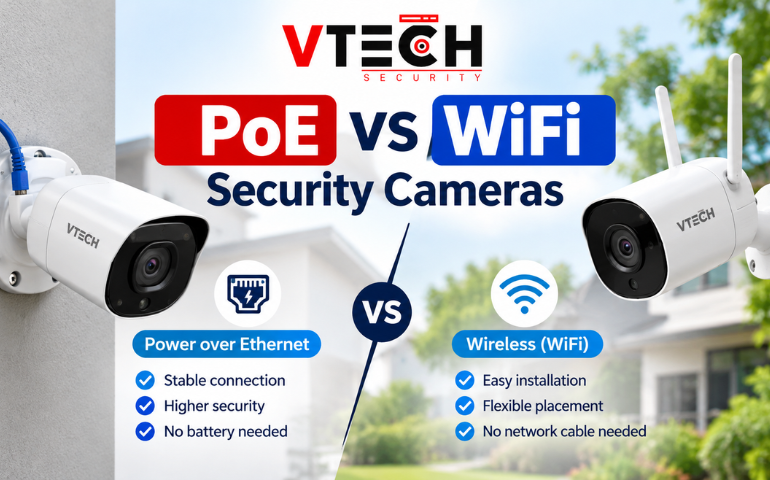
When comparing PoE vs WiFi security cameras, the main factors to consider are reliability, installation, video recording, maintenance and overall cost. Both options provide useful security features, but they suit different requirements. In this guide, we explain how each system works and help you decide which is better for your Australian property.
What Are PoE and Wi-Fi Security Cameras?
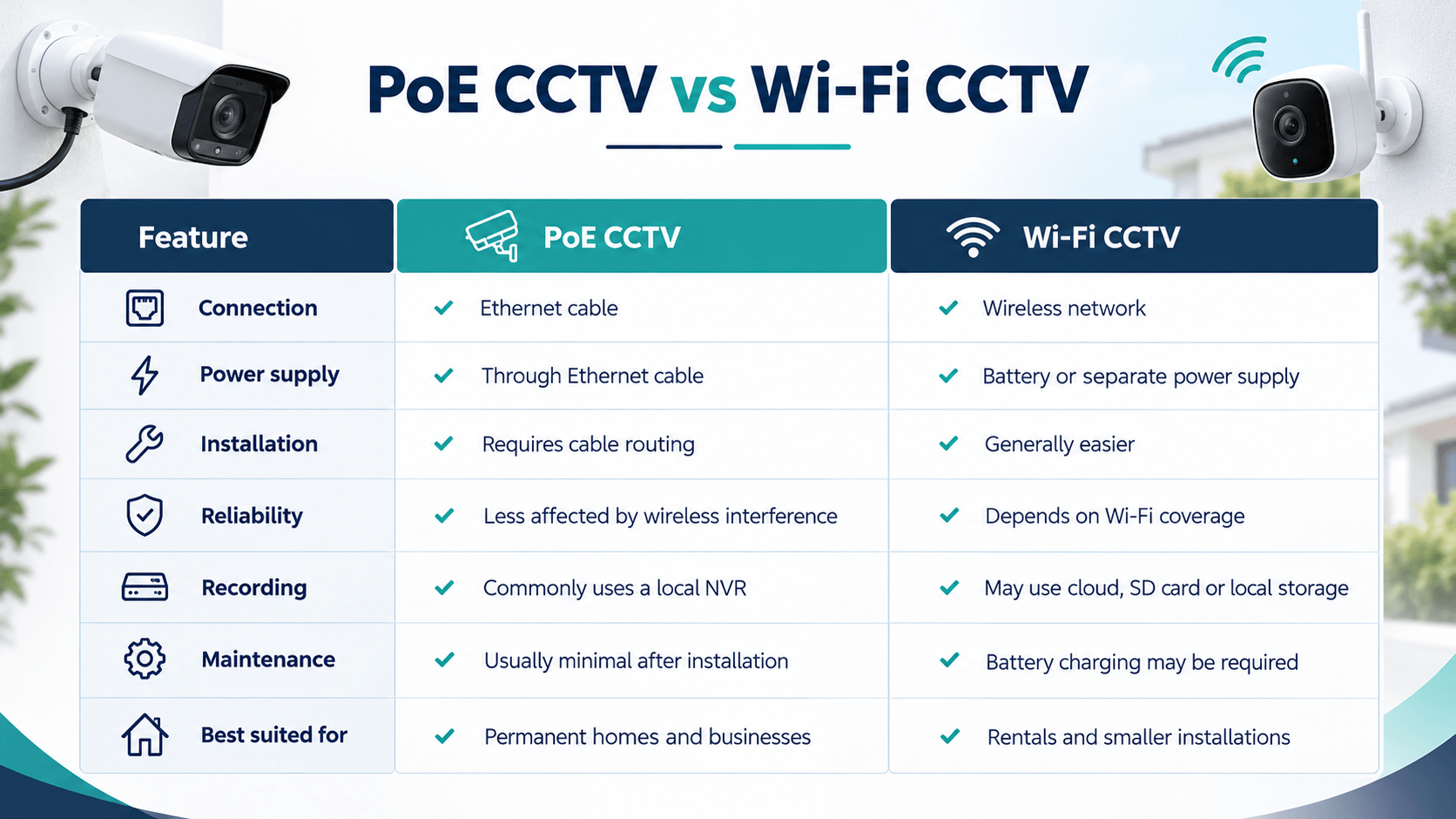
A PoE camera uses Power over Ethernet technology to transmit power and data through a single Ethernet cable. It typically connects to a PoE NVR (Network Video Recorder) or a compatible network switch, allowing multiple cameras to record footage in one central location.
In contrast, a Wi-Fi security camera transmits video wirelessly through your network. Depending on the model, it may use a rechargeable battery or a nearby power outlet. This makes wireless CCTV a convenient option when running Ethernet cables is difficult.
Both systems can offer high-definition video, motion detection, night vision and remote monitoring. However, their connectivity and installation requirements differ significantly.
PoE vs WiFi Security Cameras: Key Differences

The right option depends on the property’s layout and the level of security you need.
1. Reliability and Video Quality
Reliability is one of the biggest considerations when choosing between PoE vs WiFi security cameras. PoE cameras use a direct Ethernet connection, so their video transmission is not affected by Wi-Fi dead zones or interference from other wireless devices.
This makes PoE CCTV suitable for monitoring driveways, garages, warehouses, retail stores and other areas where consistent footage is important. A compatible PoE NVR can also record footage locally, even when the internet connection is unavailable, provided the system has power and is configured correctly.
A Wi-Fi security camera can also deliver excellent video quality. However, weak signals, network congestion and obstacles such as brick walls may affect performance. For larger Australian properties, wired security cameras are often the more dependable choice.
2. Installation and Maintenance
Installation requirements can influence your decision.
A Power over Ethernet camera requires Ethernet cabling between the camera and a compatible switch or recorder. Although installation may take longer, the system offers a permanent setup with minimal battery maintenance.
Wireless CCTV is generally easier to install because it does not require a data cable running to each camera. Battery-powered models offer additional flexibility, particularly for rental properties and locations where drilling is difficult.
However, wireless cameras still need reliable Wi-Fi coverage and a suitable power source. Battery-powered models also require periodic charging. Before choosing wireless CCTV Australia solutions, check the signal strength at every planned camera location.
3. Cost and Long-Term Value
The initial cost of a Wi-Fi system may be lower because installation usually requires less cabling. However, expenses can increase if you need Wi-Fi extenders, replacement batteries or paid cloud storage.
PoE systems may involve higher installation costs, especially in established properties where cables must pass through walls or ceilings. Nevertheless, local recording through an NVR can reduce dependence on subscription-based storage.
When comparing PoE vs WiFi security cameras, consider the complete cost of equipment, installation, storage and maintenance rather than the camera price alone.
Which Security Camera System Is Best for Australian Homes and Businesses?
Choose PoE CCTV if you need:
-
Reliable, continuous recording for important areas.
-
Multiple cameras covering entrances and outdoor spaces.
-
Centralised footage storage using a PoE NVR.
-
A permanent security solution for your home or business.
Choose wireless CCTV if you need:
-
Quick installation with minimal data cabling.
-
Flexible camera placement in a rental property.
-
A simple monitoring solution for a small area.
-
Battery-powered cameras for locations without convenient power access.
For many Australian properties, a hybrid system can provide the best balance. Use wired security cameras for critical areas such as entrances and driveways, and Wi-Fi cameras in locations where running Ethernet cables is impractical.
Conclusion
The choice between PoE vs WiFi security cameras ultimately depends on your property’s layout, budget and security priorities. PoE systems are generally better for permanent installations requiring stable connectivity and continuous recording, while Wi-Fi cameras offer convenience and flexible placement.
Before investing, compare recording options, night vision, weather resistance, remote access and ongoing maintenance. Choosing a system suited to your requirements will help you build a more dependable security setup.
At VTech Security, you can explore security camera solutions for Australian homes and businesses and choose an option that matches your property’s needs.
Frequently Asked Questions
1. Are PoE cameras better than Wi-Fi security cameras?
PoE cameras are generally better for permanent installations that require reliable connectivity and continuous recording. Wi-Fi cameras are more convenient when installing cables is difficult.
2. Do PoE security cameras work without the internet?
Yes. A PoE camera connected to a local recording system can continue recording without internet access, provided the camera, recorder and network equipment have power. Remote viewing may be unavailable.
3. Is wireless CCTV reliable in Australia?
Yes. Wireless CCTV can work reliably when cameras have strong Wi-Fi coverage and a dependable power source. Thick walls, distance and network interference can affect performance.
4. Does a Power over Ethernet camera need a separate power cable?
No. A compatible Power over Ethernet camera receives both power and data through one Ethernet cable connected to a PoE switch, injector or compatible NVR.
5. Which is more affordable: PoE or Wi-Fi CCTV?
Wi-Fi CCTV often costs less to install initially, while PoE systems may offer better long-term value for larger installations. The final cost depends on cabling, storage, equipment and maintenance requirements.