
Alarm Security
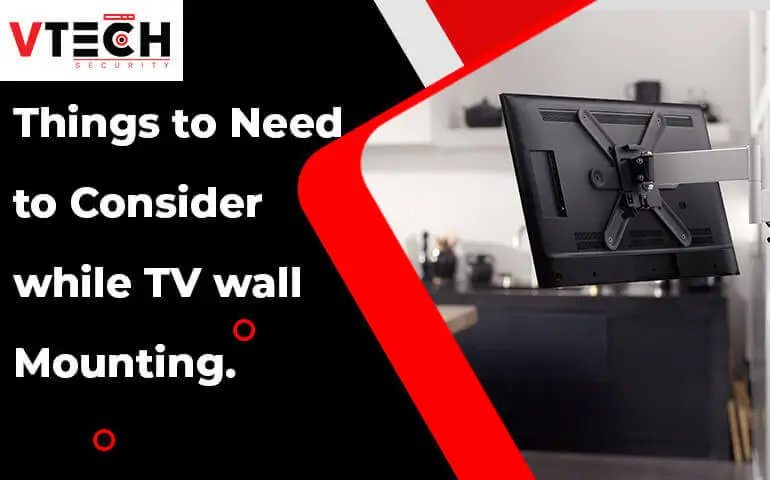
Once it comes to actually installing the television, the wall itself is the most important consideration. With a brick, concrete, or block wall, all you need are a pencil and a spirit level, as well as plugs and screws and a decent drill bit to get the job done. If there is plasterboard connected to the wall, be careful not to overtighten the screws; otherwise, the plasterboard may fracture. When dealing with a fastener or stud wall, things become a little more complicated. In general, it’s preferable to avoid installing a television on a stud wall, particularly if the television is big and heavy, but it isn’t impossible, and there are specialised fixings available for this use. And you can Directly Call Vtechsecurity for more Suggestions and Installation Processes…
When installing a television on a stud wall, it is always best to use a flat bracket. An overhanging bracket that may be tilted in various directions or pushed away from the wall will serve as a fulcrum, causing the bracket to come loose and the TV to fall out of place. The only thing you’ll have left will be a hole in the wall and a shattered television.
No matter whether you choose a flat or overhanging bracket, never compromise on the mounting hardware. It is usually preferable to spend more money on a high-quality brand and high-quality fixes; after all, you don’t want to risk damaging your costly new television by cutting corners to save a few dollars.
Flat-panel televisions manufactured today must conform to a set of mounting fixture requirements established by the repudiated Companies. To choose the most appropriate bracket for your television, you must first determine which type of mount it is compatible with. And if you are not able to get the appropriate information about this. Simply call us today. You may accomplish this by checking the specifications of your television, or you can figure it out by checking the back of the television. Four tapped holes will be placed in a square or rectangle on the bracket, and they will correspond to screw holes on the bracket that match. Because the various types of mounts are all standardised, all you have to do is calculate the distance between holes on the backside of your television to figure out which kind of bracket you need.
It’s important to remember that the holes in an OLED TV aren’t always in the center, but are instead located farther down the back of the screen if you’re planning on TV wall mounting it. You must account for this when determining the height of your brackets, or else you will wind up with a screen that is taller than you had initially planned.
Last but not least, don’t forget about cable management. All of the sources are routed via the box, which then connects to the TV through a single cable, which is extremely convenient if you have a TV with a One Connect box in your possession. Alternatively, you’ll need at least two cords running from your system to your television, and perhaps more.
There are two options for cable management if you’ve placed your television on a solid wall. There are two options for hiding cables: to conceal them in the wall or to leave them exposed. Alternatives to trunking include adhesive D-Line twisted-pair (also known as a plastic conduit for the wires that adheres to the wall), which may be used to quickly, simply, and attractively conceal cables.
You may find a number of specialised installers that would be delighted to properly wall mount your television, and a number of stores also provide a comparable service for recently bought televisions. However, if you want to do it yourself, keep our suggestions in mind, and you’ll be able to achieve a position that you’ll be pleased with for years.