
Home Security
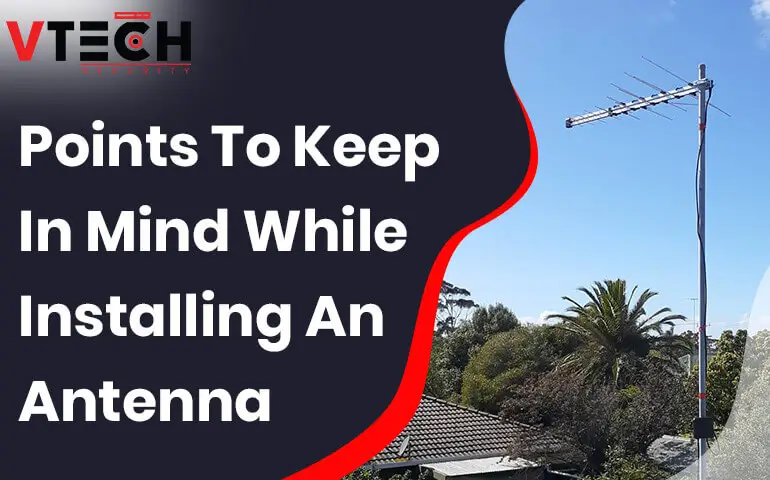
It is just as essential to install an antenna properly as it is to choose the right kind in the first place. The antenna installation may imply that the antenna works to its finest or to its worst. By following a number of important principles and recommendations, the optimum performance may be achieved from an antenna under the given scenario. Whenever installing an antenna, certain sacrifices have to be made, but following some guidelines, suggestions, and tips will allow the performance to be improved for a particular scenario.
Two important elements are wiring and antenna installation
The newest technology, which is based on TV sets, has already replaced the previous form of television simply because they are competent enough to create better quality with digital ambient noises. With the continuous development in technology, the desire for watching the better image with digital audio quality on the television has reached a significant height.
A qualified and capable antenna setup provider for the usual antenna installation Melbourne also carries forward with installing the aerial for you. Besides the television set, proper digital antenna installation comes with wiring as the two other important elements that need to be addressed to have a better watching experience, having complete information on the industry norm for such antenna arrays that provide different channels. Besides that, the antennas must be placed on a considerable distance to get a stronger signal. As far as the digital TV antennas, experts say that installing such a device is more difficult because you need to consider many variables.
Install a single-direction antenna
Currently, home theatre setups are a common thing. At the time, whenever the home cinema installation is done, you have to select and choose the appropriate antenna for your home theatre system. Antenna installation Melbourne, followed by home theatre installation, completes the process. On the other hand, the essential element in the antenna installation Melbourne process is the decision whether to create an inside antenna or an outside antenna. Selecting whether to build a unidirectional or multi-directional antenna is also essential. A bidirectional antenna takes up signals just from one direction and rejects others, while a multidirectional antenna can gather up signals from all directions.


Tips For Improving Antenna Signal
- However if visitors raised and aligned your antenna it may not be sufficient. The signal may simply be too far away or too faint to obtain a good image. That’s where an antenna booster or TV amplifier may assist. Although many of the gadgets on the market today are simply plug-and-play it still needs appropriate installation. Improper installation may aggravate problems or create additional signal interference , overload and distortion. Moreover, improper installation may also impact mobile phone signal interruption. So here it may be necessary to contact a professional installer to verify the signal and installation.
- It makes no difference whether you use a unidirectional or multidirectional antenna if it is not aimed towards a transmission tower. If you really are having bad reception a simple remedy is to modify your antenna. Just a few inches can create a change. Simply input your location here and locate your nearest transmission tower. Then it’s as easy as to use your mobile phone gps to aim it straight towards the tower. It will likely take a very little experimentation to locate the ideal location. But once you’re receiving a straight signal you shouldn’t suffer any loss.
- Apparently your antenna is OK, but it can’t pick up signals from many towers. It’s time for a second transmitting antenna. This ensures you receive signals from many towers and your TV picks the best quality for each channel. Stacking or installing antennas too near together may create issues. A distance of 1 to 2 metres between antennas is ideal. Then just combine them using a coaxial signal convolution. To prevent phase issues, use the same length of coaxial connection between both antennas and the combiner. Install and test each antenna separately before connecting them to the connector. Just do a channel search for both and merge. Also use signals while prioritising the finest from each.
- If a restart doesn’t work, it’s time to check your antenna. A most common cause of transmission degradation is a lack of unobstructed sight line to radio towers. Above a power source, your antenna should be the highest point on your property. Also, avoid building, plant, or mountain bouncing and splintering the signal. Obstacles cause the signal to split and come “out of phase,” creating problems with your antenna. Experts advise placing an antenna 10-20 feet above the ground. And the greatest choice is typically your roof.
- Even though it was a cheap solution in the older period of bunny ears, the foil on the digital antenna certainly has been doing much to help. By adding tin foil to the antenna, you were, in principle, improving the reception by expanding the antenna. If you were fortunate, and the foil occurred to reflect receiving radio frequencies, this might have worked for a long time. But on the other hand, it’s just as likely to screw up your coverage for other channels. Rather, it’s definitely time to search for a stronger antenna or implement the remainder of this advice to obtain better TV coverage.