
Home Security
We frequently receive the same number of questions: “Why am I not receiving a decent signal?” What can I do to enhance the overall quality of the product? What are the advantages and disadvantages of installing various antennas? As well as other things….. This blog will provide you with all of the answers to these questions. If you really need assistance with interior digital antenna installation, rooftop installation, or even outdoor TV antenna installation, we can assist you with your needs. We can even assist you in obtaining a complimentary digital television service.
There are three kinds of TV antennas to select from: indoor antennas, outdoor antennas, and rooftop antennas. Indoor antennas are the most common form of TV antenna. Each has a unique installation technique, each with its own set of advantages and disadvantages. We suggest that you choose a TV antenna based on your geographic location. If you reside near a transmitter in a good signal region, you should consider installing an indoor antenna. In regions with a poor signal, a TV antenna mounted on a roof or outside is preferable.
Types of Antennas
Setting up an indoor TV antenna
This is the simplest kind of television antenna installation since all you have to do is connect the coaxial wire from the television to the antenna and place it close to the television. Simply place the antenna closer to a window to see if it improves the quality of the image anymore. It is preferable to maintain a straight line of communication with the transmitter, therefore avoid allowing the antenna to get blocked by (metal) objects. However, if the image is still not clear, try positioning the camera as high as possible in order to get a stronger signal, and then shifting the position from left to right until you have a good view. It is very simple to set up. Then, after connecting the coaxial wire to the television and doing a basic channel Scan, you’re good to go. If you’re relocating, this is a low-cost and easily transportable option. Please remember to re-run the channel scan after moving your television antenna from one location to another.


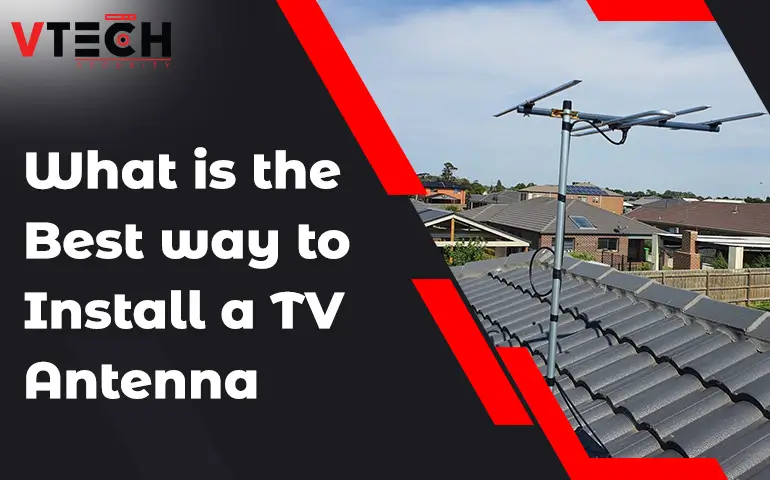
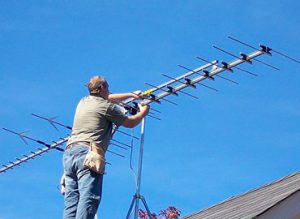
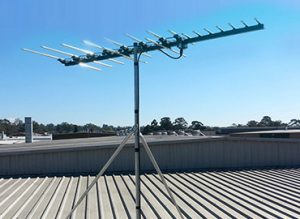
The most time-consuming task is the installation of an outside TV antenna. When putting an antenna on the roof or the side of your home, be sure to work cautiously and adhere to safety regulations at all times. Make sure you follow the directions to the letter. Take a look at what your neighbors have done to assist you in determining the best location for your TV antenna – all antennas should be pointing in the direction of the transmitter. TV signal that is stronger and of higher quality. It is effective in locations that are far distant from a transmitter. Before adding an image, double-check that it is free of distortion. Whenever in doubt, always get a professional to do the job for you, and for this you can call Vtechsecurity – it will be well worth the money to save the trouble!
Putting up a TV antenna on the roof
The TV antenna should be installed inside the top of your roof, according to the directions in the instructions. Before you connect the aerial, think about where you want to put it in reference to the television. The objective is to minimize banging your head on the ceiling every time you go into your loft! Try a few different locations until you find one that provides the greatest TV reception. A useful suggestion is to get a model that can be used as both a loft TV antenna and an outdoor TV antenna – if it doesn’t work in the loft, you can still use it outdoors. It is less difficult to install than external antennas since there is no need to climb on the roof. Due to the fact that it is not exposed to the environment, it retains its integrity better than an external antenna.
Add an aerial amplifier to your system.
If you are suffering signal loss owing to lengthy coaxial cables or the splitting of signals to numerous TVs, we suggest that you upgrade your TV antenna system to include an aerial amplifier or signal booster. Invest in a TV antenna with built-in amplifiers or a stand-alone amplifier to use in conjunction with your existing outside antenna. If you must use one, don’t use it just because you can. If you use it improperly, it not only amplifies the signal, but it also increases electric noise and interference. It has the potential to significantly improve your television viewing experience if used correctly.